Seminar on “Exploring History, Culture, and Knowledge of Southeast Asia: Interdisciplinary Perspectives for Sustainable Development”
29-30 June 2026
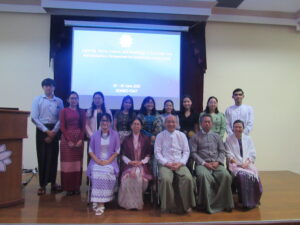
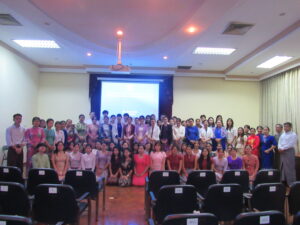
SEAMEO CHAT successfully conducted a two-day seminar titled “Exploring History, Culture, and Knowledge of Southeast Asia: Interdisciplinary Perspectives for Sustainable Development” on 29–30 June 2026 at its Centre in Yangon, Myanmar.
In a time of rapid globalization, digital transformation, and socio-cultural change, the preservation, interpretation and transmission of history, culture, and knowledge have become increasing complex. While modernization brings new opportunities for innovation and connection, it also creates risks for the loss of cultural heritage and traditional knowledge. This highlights the need to critically examine how history, culture and knowledge can contribute to sustainable and inclusive development.
As a SEAMEO CHAT has a role in promoting the study of history, culture and tradition, this seminar provides a platform for dialogue, knowledge sharing, and collaboration for post graduate students and young scholars. It aims to explore how history, culture, and knowledge can be used to support sustainable development and strengthen regional cooperation in Southeast Asia. To promote interdisciplinary research on history, culture, and knowledge of Southeast Asia, to strengthen regional academic collaboration and knowledge exchange, to explore the role of heritage and knowledge systems in sustainable development.
Over the two days, 14 research papers were presented by young scholars from History, Archaeology, International Relations, and Political Science departments under the Ministry of Education, Myanmar with a total of 87 researchers and scholars attending the sessions at the Centre.
The two-day seminar was a meaningful success—creating a collaborative space for young scholars to learn and grow together. The seminar seeks to advance regional dialogue and cooperation by positioning history, culture and knowledge as integral components of sustainable development in Southeast Asia. Through interdisciplinary engagement and collaborative exchange, it aims to contribute to a deeper appreciation of the region’s shared heritage and to support innovative approaches for its preservation and continued relevance in the 21st century.